
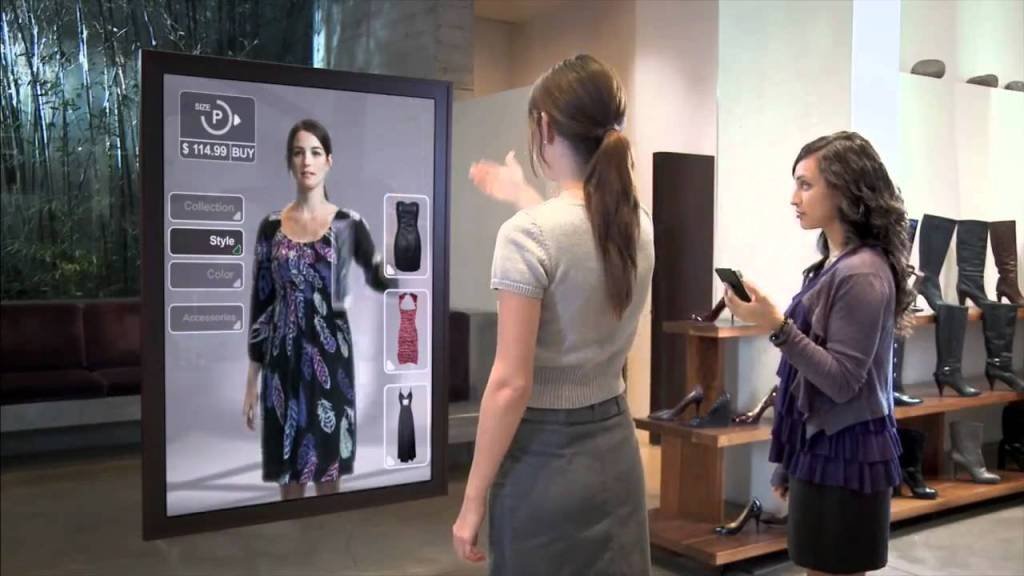
Today’s retail industry looks quite different than ever! Even more so from what we remember from this time last year. COVID-19 turned out to be one of the biggest setbacks for the retailers around the globe. 2020’s stay at home orders and country wide lockdown forced retailers to adopt digital business models quickly to survive, stay relevant and future proof their core business. Embracing digitization became a necessity rather than a choice and is progressing rapidly worldwide.
Adopting new retail technology was one-way grocers adapted to the situation while maintaining social distancing guidelines, such as Cashier less checkouts, Online ordering and Contactless pick up, Smart carts, etc.
Non-essential retailers, like clothing stores and small businesses, had to move online to stay afloat. Bookstores moved to online and audiobook sales, gyms/fitness centers shifted to Zoom classes, etc. Those with a digital presence were not hit as hard as those who relied on traditional in-store foot traffic solely.
A quick look at the Retail industry market data showed:
- Juniper Research estimated that the annual spending on AI in Retail will reach $7.3B by 2022. 74% of the AI and machine learning solutions in Retail revolve around giving better customer experience.
- 56% of consumers have tried a new retailer during the pandemic and e-commerce sales increased by 32.4% in 2020, while brick-and-mortar sales decreased by 3.2%.
As always, technology led innovation helped to give a wholesale makeover to this new models of retailing possibilities to reach out to customers. Some of the top technologies and trends helping in digital transformation of retail industry are:
1. Contactless technology (Biometric Payments): Contactless technology has been one of the winners during the global pandemic, with examples like self-checkout facilities in stores enabling a more hygienic, comfortable, and convenient shopping experience. In future we will see newer options with enhanced technology like payments processed via a fingerprint or palm print scanner linked to the payment card which is already being experimented in Amazon Go stores.
2. Enterprise Mobile Application Adoption: 80% of the retail workforce is made up of deskless frontline employees who spent as much as 3 hours per day looking for information. But the investment towards frontline employee technology was only 1% of the entire software budget.
According to a Harvard Business Review report, 86% of polled companies believe frontline workers need better technology-enabled insights to make good business decisions. Recognizing this gap, employers are providing retail employees with an accessible mobile platform for essential work-related information like Shift Schedules, Communicate important corporate news, Document Library, answers to FAQ’s, etc
An organic foods grocery retailer connected its entire workforce to a centralized employee communication app and reduced email volume by 90%. The retailer also digitized its paper-based processes, resulting in $7,000 in cost savings.
3. Cybersecurity: E-commerce adoption hit a new high in 2020, and so did cybersecurity attacks. According to recent research, 24% of all cybersecurity attacks were aimed at retailers in 2020 which was more than any other industry. Many businesses recognized the importance of cybersecurity and ramped up efforts to address their vulnerabilities. In 2021, 55% of the businesses plan to increase their cybersecurity budgets, even with stagnant or lower budgets compared to 2020.
4. Predictive Analytics: With the abundance of data, it is only logical that the Retail industry becomes more data-driven. Here’s how retailers are leverage predictive analytics to make smarter business decisions. Some of the factors which they analyze are Purchase and inventory reporting, Consumer behavior and customer journey analytics, Customer preferences and interests, optimize placements of offers and products, targeted marketing campaigns, etc.
5. Microservices: Microservices architecture has penetrated many domains and is a life-saver. Microservices helps in dividing large software systems into smaller services. Each service can be developed and supported separately while staying in touch with the others through an API. Even in a different programming language or on a different platform. For retailers, it means that cumbersome old legacy systems can now be replaced with an alternative that offers flexibility, simple to integrate, easy to modify, etc.
6. Progressive Web Apps: Progressive Web Apps are browser-based applications. They can be accessed from any device without downloading the app. For some reason if retailers can’t decide on whether to build native apps for Android and iOS or a cross-platform app based on Xamarin or Flutter, PWAs offer a third, lower-cost, option and a whole range of possibilities. PWA are easy to update (even when the app is closed on the phone), highly responsive, frame-work friendly, etc. PWAs can easily be found by search engines and support push notifications.
According to Smashing Ideas, companies that switch to PWA (Progressive Web App technology) notice engagement increases from 20% to 250%.
7. Geolocation: The emergence of iBeacon and geolocation technology has changed the way retailers communicate and engage with their customers. According to Google, 82% of smartphone users turn to their phones when not sure about their shopping decision. Google even introduced a special term “micro-moments” and “micro-moment marketing” to describe purchases made on the spur of the moment. In practice, it means location-based advertising, analyzing in-store behavior, sending push notifications with personalized offers, etc.
Conclusion:
Thanks to early adopters, digital transformation in the retail industry has seen several game-changing innovations that have redefined the entire customer experience. The term Retail 4.0 emerged due to the massive digital transformation in the retail industry. It incorporates all the modern methods today’s retailers are using to augment the shopping experience at all touchpoints. To survive in this dynamic environment, businesses have had to re-evaluate the very concept of retail life cycle. Yes – this pandemic as accelerated the Wholesale – Retail Makeover through technology adoption to create new possibilities overall!
#DigitalTransformation #DigitalDisruption #ProductInnovation #Geolocation #Retail #Mobile #Application #Microservices #API #Cybersecurity #PredictiveAnalytics #Biometrics #Pandemic #Covid19 #ContactlessTechnology
#Strategy #Management #Consulting #Transformation #Technology #Outsourcing #CreativeDisruptions #EternalQuest #FindingTruth
 Randomness Pattern